Containment Subject Active
The Angel
> CONTAINMENT STATUS: BREACHED_
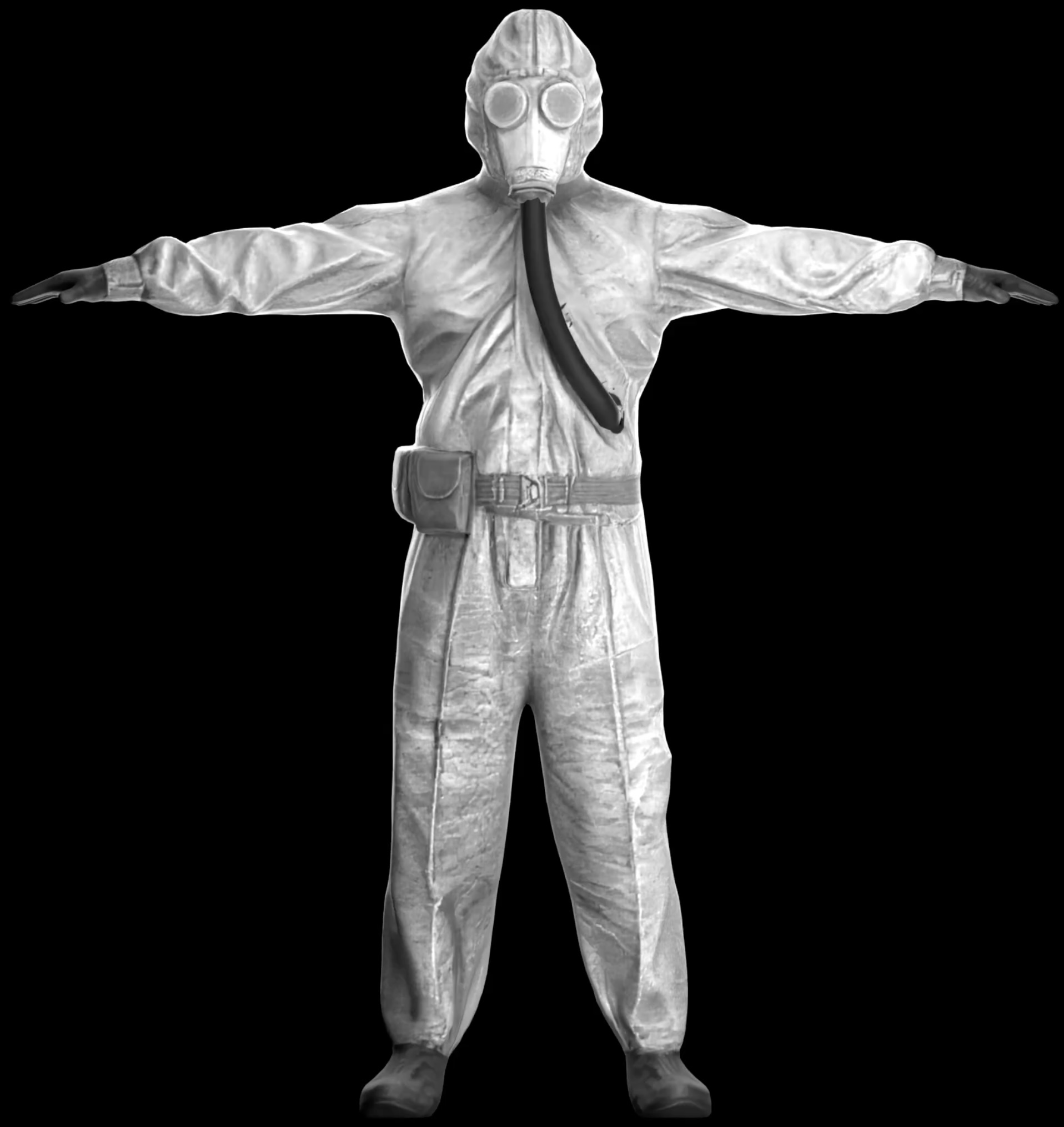
> SUBJECT_FILEBackground
The Angel was once a rescue worker. During the early meltdowns, they volunteered for containment duty. The suit kept them alive. The radiation kept them… changed.
They do not speak. They do not run. They simply appear — arms outstretched — at the end of long corridors when the lights begin to flicker.
Employees report a faint hissing sound, like air escaping a sealed chamber. Some say it sounds like breathing. Others say it sounds like weeping.
> OBSERVATION_LOGBehavioral Analysis
The Angel does not hunt. It does not chase. It simply occupies space that it should not.
Facility cameras have captured its presence in hallways, storage rooms, and even the Core antechamber — always in the same pose, arms outstretched, head slightly tilted. Its hazmat suit, originally standard-issue for containment workers, has fused with the biological material beneath it.
Whether there is still a person inside is a matter of ongoing debate among facility medical staff. The gas mask filters have long since corroded, yet the hissing sound persists.
“It wasn’t there. And then it was. I didn’t hear it arrive. I just felt… cold.” — Employee #4471, Exit Interview (posthumous)
> INCIDENT_54-58The Meltdown Volunteers
During the early meltdowns of 1954-1958, facility management called for volunteers to enter containment zones and manually seal breached reactor housings. Twelve workers volunteered. The Angel is the only one that came back.
Post-incident radiation surveys recorded exposure levels exceeding 50,000 rads in the containment corridors. No known organism can survive such exposure. Medical staff were unable to explain how the subject continued to function, and eventually stopped trying.
> PROTOCOL_STATUS: FAILEDCurrent Containment Protocols
There are no effective containment protocols for The Angel. Previous attempts at physical restraint, electromagnetic barriers, and chemical sedation have all failed. The subject simply appears in a new location when unobserved.
Current facility guidelines recommend that all personnel maintain visual contact if encountered, walk backward slowly, and report the sighting to their supervisor. Do not speak to it. Do not touch it. Do not look directly at the gas mask lenses for more than three seconds.